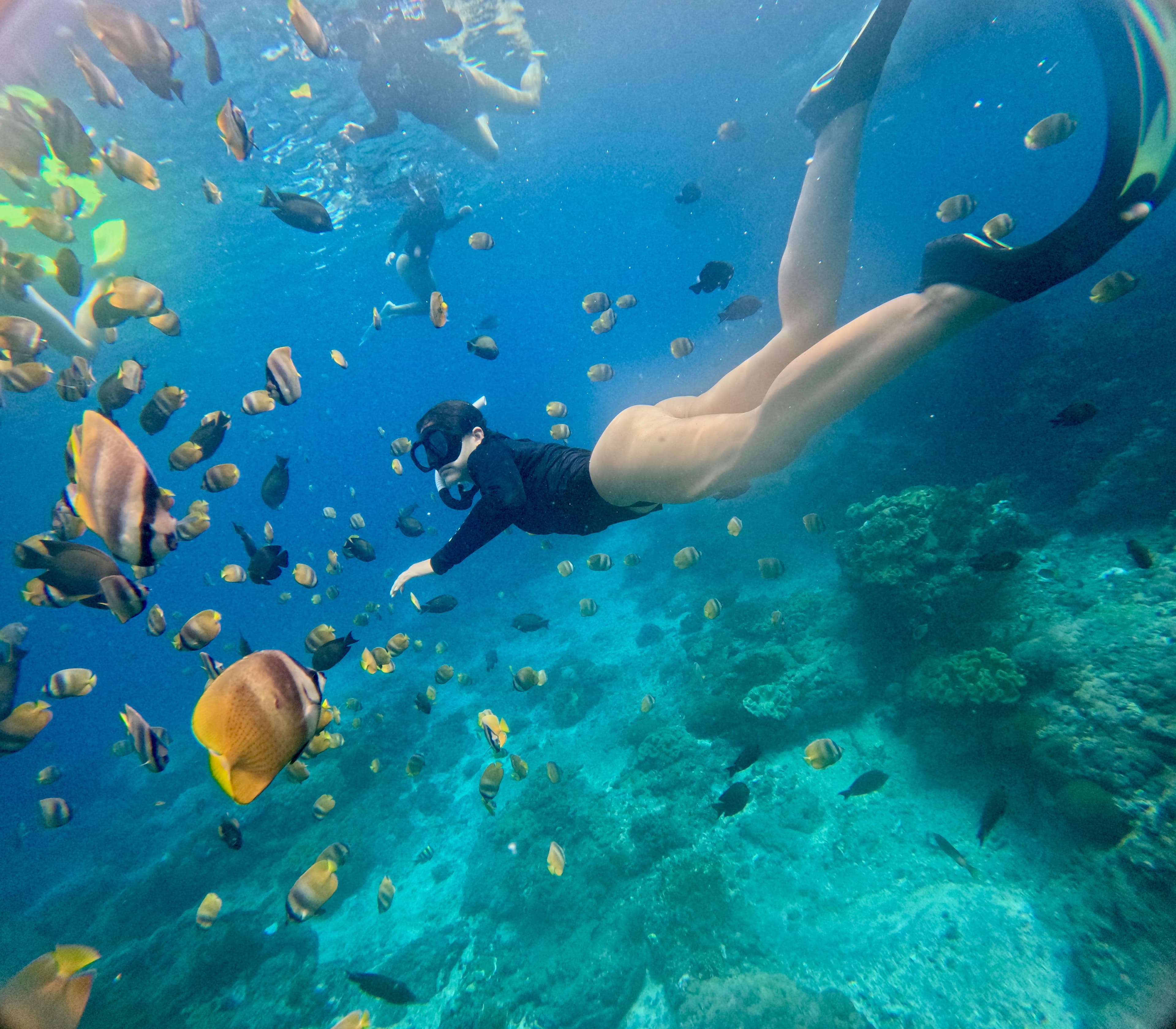
Best Time to Go Snorkeling in Nusa Lembongan
A practical guide to planning around tides, morning sea conditions, visibility, and seasonal manta sightings.

Morning trips usually feel calmer
Most guests prefer morning snorkeling because wind and boat traffic are often lighter earlier in the day. Calm water makes it easier to move between reef stops and gives guides more flexibility when choosing the best route.
Conditions can still change quickly around the islands, so the exact stop order should always follow the crew's daily sea read rather than a fixed checklist.
Visibility changes with tide and weather
Clear visibility is usually linked to settled weather, manageable swell, and favorable tide movement. After heavy rain or strong wind, some reef areas can become less clear even when the sun is out.
If photography is important, tell the team before departure. They can help prioritize brighter reef sites when the day's conditions make that possible.
Manta sightings are never guaranteed
Manta Bay is famous for manta rays, but sightings depend on ocean conditions and animal movement. A good trip should still feel worthwhile because Lembongan has coral gardens, reef fish, and scenic coastal routes beyond manta stops.
The best mindset is to book for the full marine experience, then treat manta encounters as the highlight when nature allows it.